
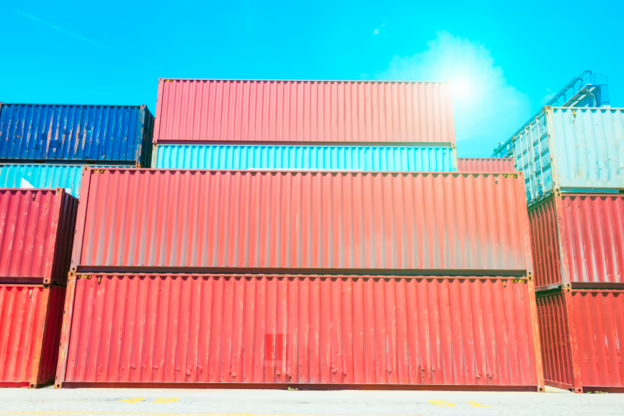
If you are searching for a heavy-duty steel box to hold tools on a construction site, store extra inventory for your retail business, or move cargo across the country, you have probably run into a confusing web of industry jargon. You might see one company advertising shipping containers while another offers storage containers.
The short answer is yes, they are often the same, but with a few important asterisks. People frequently use these two terms interchangeably, but they do not always refer to the identical piece of equipment. Understanding the subtle distinctions can save you from buying or renting the wrong box for your job.
At LGI Transport, we want to clear up the confusion so you can select the right structure for your exact budget and physical requirements.
When the Terms Mean the Same Thing
In the vast majority of industrial, commercial, and residential applications, a storage container is simply a shipping container that has transitioned to a static role.
These massive structures are built out of CORTEN steel, a specialized steel alloy designed to resist atmospheric corrosion and weather. They are manufactured to survive the brutal conditions of open-ocean travel, where they are stacked up to nine units high on massive cargo ships and blasted by saltwater and freezing winds.
When these structures retire from active sea duty, or when local companies buy brand-new units directly from the manufacturer to use on land, they become storage units. In this context, calling a shipping container a storage container is completely accurate.
If you are a business owner sourcing a shipping container in NJ for local depot storage or regional job sites, you are getting this exact grade of heavy-duty marine hardware. When you work with a supplier like LGI Transport, the temporary portable storage units delivered to your location are built to these rugged maritime specifications.
When the Terms Direct You to Different Products
The confusion arises because storage container is a broader, catch-all term. While all steel ocean vessels can become storage boxes, not all storage units are heavy-duty ocean vessels.
If you contact a residential moving service or a local hardware store, a storage container might refer to a lightweight box made of aluminum, thin sheet metal, or even heavy plastic. These light-gauge boxes are designed exclusively for domestic household moving or light backyard storage. They lack the structural integrity, heavy steel corner castings, and thick marine-grade plywood floors found in standard maritime units.
This distinction is particularly critical for businesses hunting for durable storage containers in Newark, NJ, where heavy industrial use and urban density demand high security and maximum structural strength.
To keep these categories straight, look at how the different names overlap across the industry.
- Shipping Container: The standard umbrella term for any steel box built to international maritime standards.
- Storage Container: A general term that includes retired sea vessels, but also includes lightweight residential moving pods.
- Conex Box: A military-derived historical term that people still use today to describe standard steel cargo units.
- ISO Container: A technical term meaning the box complies with the strict sizing and safety guidelines of the International Organization for Standardization.
Comparing the Options Side-by-Side
To help you visualize how a dedicated industrial cargo unit stacks up against a lightweight alternative, look at this breakdown of characteristics.
| Feature | Maritime Shipping Container | Light-Duty Moving Pod |
| Material | 14-gauge corrugated CORTEN steel | Aluminum, fiberglass, or thin plastic |
| Security | High (Steel locking bars & lockboxes) | Moderate (Standard door padlocks) |
| Stacking | Stackable up to 9 units high loaded | Cannot be stacked or heavily loaded |
| Weathering | Wind and water-tight against storms | Water-resistant; vulnerable to debris |
| Weight Limit | Holds up to 60,000+ lbs safely | Typically limited to 4,000–5,000 lbs max |
Why Steel Shipping Units Excel at Storage Roles
If you need secure space on a commercial job site or property, choosing a genuine cargo box over a light-duty alternative is almost always the smarter financial move.
1. Unmatched Site Security
Construction sites and commercial yards are frequent targets for theft. A genuine steel cargo box acts like a fortress. The thick corrugated steel walls cannot be cut open with simple hand tools, and the heavy cargo doors feature robust locking rods.
When you lease or buy through LGI Transport, you can also utilize specialized lockboxes that completely shield your padlocks from bolt cutters and grinding wheels.
2. Lifespan and Durability
A light-duty storage pod can dent, crack, or develop roof leaks after a few years of exposure to intense sun and heavy snow. In contrast, a structural steel container is built to last for decades. Even after retiring from global shipping routes, a used unit can easily provide 10 to 20 years of dry, secure ground storage with minimal maintenance.
3. High Weight Capacity
If you are storing heavy machinery, pallets of tiles, pipes, engine parts, or dense raw materials, lightweight pods will fail. The floors of an ISO cargo unit are supported by heavy steel crossmembers and covered with thick, treated hardwood planks designed to withstand the weight of moving forklifts.
Choosing the Right Grading for Your Project
If you decide to acquire a steel container for your storage needs, you will need to select an appropriate equipment grade. You do not always need a brand-new box if your only goal is to keep extra materials dry in a secure yard.
One-Trip Units
These are the closest thing to brand-new units available on the market. They are manufactured overseas, loaded with a single cargo shipment to pay for their transit, and then sold immediately upon arrival. They have zero rust, no dents, and immaculate interior floors. They are perfect for highly visible retail settings or offices.
Cargo Worthy (CW)
These boxes have spent years traveling the globe but remain structurally sound. They meet all international criteria for ocean transport, meaning the structural frame is straight and the doors seal tightly. If your local building project requires a highly durable structure, a CW box from LGI Transport provides exceptional value.
Wind and Watertight (WWT)
This is the most popular grade for affordable land storage. While these boxes may feature exterior surface rust, scratches, and patches from years of service, they are fully checked to verify that rain and snow cannot penetrate the interior. They keep your property completely dry at a fraction of the cost of a new structure.
Find Your Ideal Storage Solution
Understanding the terminology is the first step toward making a smart investment for your business or project. Don’t risk your expensive equipment or valuable inventory by placing it in a flimsy, lightweight pod when you can get the security of industrial CORTEN steel.
Whether you need a temporary rental for an upcoming construction job or a permanent fleet of boxes for your industrial facility, our team can help you find the exact size and grade for your budget, contact us today.