
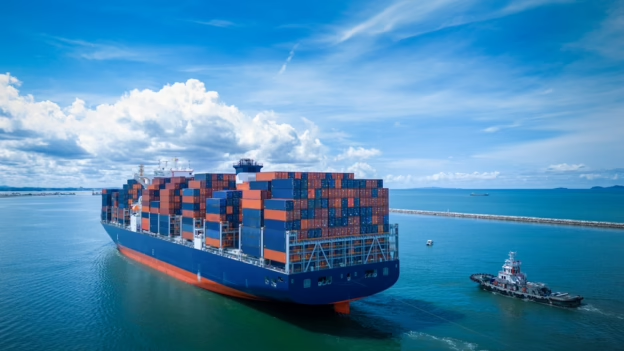
A box that sits three extra days at a marine terminal can cost more in detention and demurrage than the margin on the freight inside it. Most supply chain delays are not caused by one dramatic failure; they come from four repeatable choke points, and metal shipping containers from LGI Transport solve or soften all four when they are positioned correctly. Here is where freight actually gets stuck, with the numbers and the fixes.
Bottleneck 1: Detention, Demurrage, and the Clock You Don’t Control
Ocean carriers typically give four to five days of free time at the port, and chassis availability decides whether you use it. Once that window closes, demurrage commonly runs $150 to $300 per container per day, escalating in tiers after the first few days.
The friction is rarely the ship. It is the gap between when the box is discharged and when your receiving dock can take it, which is why the same shipper can clear a 20-foot load in a day and lose a week on a 40-foot high cube.
Three moves cut that exposure measurably:
- Pre-pull and ground the box at a drayage yard before free time expires, then deliver on your own schedule.
- Read the fine print on free time versus per-diem equipment charges, since they run on separate clocks and separate invoices.
- Own a buffer: a handful of purchased steel boxes on your property means you can strip a carrier container in hours instead of holding it as makeshift storage.
That last point is the one most operations teams underuse. Carrier equipment is the most expensive storage on earth after the free days run out.
Bottleneck 2: Warehouse Space That Won’t Flex With Your Season
Industrial vacancy has stayed tight across most U.S. markets, and the lease terms that come with new space rarely match a 90-day demand spike. The Bureau of Transportation Statistics tracks the freight volume swings that drive those spikes, and they do not wait for a landlord’s build-out schedule.
On-site metal storage containers give you square footage in roughly 48 to 72 hours instead of six months. A single 40-foot high cube adds about 2,700 cubic feet, enough for roughly 20 to 22 standard pallets of staged inventory at one-high.
Common deployments that work well:
- Overflow staging for seasonal SKUs, placed at the back of the yard near outbound doors.
- Returns processing, so reverse logistics never eats into pick-face space.
- Tool and parts cribs where a large metal bin or lockable unit replaces a trailer you’re paying per-diem on.
Compare the math honestly. Renting a trailer as storage often lands near $150 to $250 per month, while a used 40-foot unit purchased outright through LGI Transport usually pays for itself inside 18 to 24 months.
Bottleneck 3: Damaged, Mis-Sized, and Unsecured Loads
Cargo claims cluster around two causes: packaging that can’t take vibration, and containers sized wrong for the commodity. A load that fills 95 percent of a 20-foot box by volume but hits the weight ceiling at 60 percent is quietly burning money on every lane.
Matching the equipment to the freight is the cheapest fix available. Standard metal shipping containers from LGI Transport come in a handful of sizes, and the right pick depends on density more than volume:
- 20-foot standard: about 1,170 cubic feet, payload near 47,900 lbs. Best for dense goods like tile, machinery parts, and canned product.
- 40-foot standard: roughly 2,390 cubic feet, payload near 59,000 lbs. Best for mixed pallets of medium-density freight.
- 40-foot high cube: an extra foot of interior height, which matters for tall racking, furniture, and light bulk goods.
- 10-foot units: a small metal container for storage that fits tight urban yards and jobsite footprints.
Inside the box, dunnage and load bars do more for claim rates than any carrier switch. Steel walls take abuse that fabric-sided equipment simply cannot.
Bottleneck 4: Jobsite and Last-Mile Staging Delays
Construction and field-service operations lose hours daily to material that is on a truck somewhere instead of on site. Theft compounds it, with the National Equipment Register and insurers putting annual U.S. construction equipment and material losses in the hundreds of millions.
A ground-level container with a lockbox turns a staging problem into a non-issue. Crews pull from a secured point at 6 a.m. rather than waiting on a delivery window that slides to the afternoon.
Specification details that matter for this use:
- Lockbox and hasp welded over the right-hand door, which defeats most bolt cutters.
- Vents and desiccant to control condensation, since sealed steel boxes sweat in temperature swings.
- Shelving kits that convert an empty shell into organized metal storage with defined bin locations.
New Versus Used: What Actually Changes the Total Cost
This is where most buyers overpay or underbuy. One-trip (functionally new) units have minimal rust, clean floors, and fresh door gaskets, and they typically carry a 10 to 15 year service life in a yard environment before meaningful corrosion work is needed.
Cargo-worthy used boxes cost significantly less and are certified for international shipping, while wind-and-watertight units are the value pick for stationary storage containers that will never move again. When you review cargo shipping containers for sale with LGI Transport, inspect four things before you sign:
- Floor condition: marine plywood should be solid, not spongy, with no daylight at seams.
- Door operation: all four cam bars should seat without a pry bar.
- Roof panels: standing water and dents collect rust faster than wall corrosion.
- Gasket integrity: cracked seals are cheap to replace but costly to discover after a rainstorm.
Buying in bulk changes the equation too, since delivery costs per unit drop sharply when a tilt-bed carrier makes one trip instead of four. A quick call to LGI Transport with live inventory usually surfaces better pricing than any online listing.
Get Pricing on Your Next Container
Tell us the commodity, the site, and the timeline, and our team at LGI Transport will match you with the right sizes and condition grade instead of whatever is sitting closest on the lot. Contact LGI Transport today for current inventory and delivered pricing on new, used, and bulk orders.