
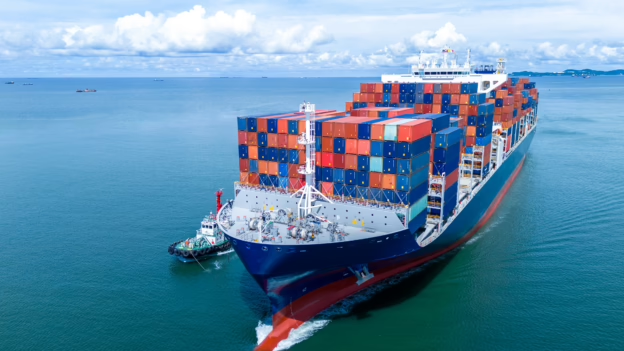
When a drayage carrier no-shows, the clock on your storage container does not pause. Most US marine terminals allow four to five calendar days of free time after discharge, and once that expires, demurrage typically runs $150 to $300 per container per day, climbing into tiered penalties after the first week. The fastest fix is a TWIC-certified replacement carrier with an open terminal appointment, like LGI Transport, not a cheaper rate quoted for next Tuesday.
What follows is the sequence experienced logistics directors run when a scheduled pull collapses, plus the documentation and vetting steps that decide whether a backup hauler can actually touch your freight.
The Money Starts Bleeding Before Anyone Calls You
Demurrage is charged by the terminal for cargo sitting on the pier. Per diem, sometimes called detention, is charged by the ocean carrier for the equipment itself once it leaves. A container stuck in limbo can accrue both, and at large gateways the combined daily exposure on a single box often lands between $200 and $500 once chassis rental is added.
The Federal Maritime Commission has tightened billing practices in recent years, including rules on who may be invoiced and what detail the invoice must carry. That gives you grounds to dispute charges, but disputes take weeks to resolve while the daily accrual continues. Moving the box immediately with LGI Transport is always cheaper than arguing about it later.
The First Hour After a Carrier No-Shows
- Confirm appointment status: Check the terminal’s portal. Some no-shows are actually cancelled appointments the original carrier never rebooked, which changes what a replacement needs to do.
- Review last free day (LFD): Check whether the terminal grants extensions for labor disruption, equipment shortages, or vessel delays. Several ports issue automatic free time waivers during congestion events.
- Verify hold status: Ensure the container is available and clear. Customs, freight, USDA, and terminal holds all block a pull regardless of who shows up with a chassis.
- Call backup capacity: Call two carriers, not one. Same-day capacity is thin, and having a reliable drayage partner like LGI Transport on speed dial is your best hedge against a quote evaporating.
- Ask the critical dual question: Ask each replacement carrier for their appointment window and their chassis source in the same breath. A hauler with drivers but no chassis pool access is a hauler who cannot help you today.
Why TWIC Credentials Decide Who Can Pull Your Box
Any driver entering a secure area of a US marine terminal needs a Transportation Worker Identification Credential (TWIC), issued through the TSA and the Coast Guard under the Maritime Transportation Security Act. Enrollment costs roughly $125 and takes several weeks, so no carrier can credential a new driver to solve today’s problem.
When you vet a short-notice carrier, confirm three things beyond the TWIC itself:
- Active port registration: Registration with the specific terminal, including a SCAC code on file and current trucking company access.
- Interchange agreements: Active UIIA membership and interchange agreements with the ocean carrier holding your equipment.
- Appropriate insurance coverage: Insurance limits that match the cargo value, typically $100,000 in cargo coverage minimum, higher for electronics or pharmaceuticals.
An established carrier like LGI Transport can recite their terminal access status without looking it up. A carrier who promises to “get set up this afternoon” will not clear the gate in time.
Paperwork Gaps That Stall a Replacement Pull
Roughly half of failed emergency pulls trace back to documents rather than trucks. The replacement carrier inherits nothing from the original booking, so assemble the packet yourself before handing off the load to LGI Transport:
- Delivery order or release: Reissued in the new carrier’s name from the ocean carrier.
- Pickup number or PIN: Which many terminals regenerate per trucking company.
- Payment confirmation: Proof that freight charges and terminal fees are paid, including any pier pass fees.
- Customs clearance: Written entry clearance confirmation.
- Chassis authorization: Documentation for ocean carriers that restrict which pools may be billed to their account.
Read the terminal’s fee schedule before authorizing a night or weekend gate move. Extended hours pulls carry surcharges of $50 to $150, which is still a fraction of two more days of demurrage on a high-value container.
Where the Container Goes If the Consignee Isn’t Ready
Pulling the box off the pier solves demurrage but starts the per diem clock on the ocean carrier’s equipment. If your warehouse has no dock door available, the practical options are a bonded yard, a drayage carrier’s secure lot, or a street turn where the container goes directly to an exporter needing empty equipment.
Yard storage typically runs $15 to $40 per day for a grounded container, meaningfully less than pier demurrage at most gateways. If the delay will stretch past a week, ask LGI Transport about transloading the cargo into a leased storage container or dry van so the ocean equipment can be returned and per diem stops accruing.
Sourcing Regional Storage Equipment
When logistics teams or facility managers buy ISO shipping containers outright for on-site storage rather than renting, they acquire the same heavy-duty steel units that moved through marine terminals.
If your operation needs local ground storage, sourcing used shipping containers for sale in New York through LGI Transport provides access to inspected, weather-tight units delivered directly to your job site or facility.
Sizing Considerations for High-Volume Storage
Selecting the right footprint depends heavily on available site clearance and cargo volume.
For high-volume inventory, commercial storage, or large job-site equipment, opting for a 40 ft shipping container for sale gives you roughly 2,390 cubic feet of secure capacity, offering a significantly better cost-per-square-foot value than purchasing multiple smaller units.
Building a Backup Carrier Bench Before You Need One
Shippers who rarely pay demurrage share one habit: they have pre-qualified two or three alternate drayage carriers, like LGI Transport, at every port they touch, with paperwork already exchanged. Setup with a new carrier normally takes three to five business days for credit terms, insurance certificates, and terminal registration, which is exactly the window you do not have during a failure.
Review that bench quarterly. Terminal access lapses, insurance certificates expire, and driver counts shift with seasonal volume, so a carrier who covered you last spring may not have a TWIC-carded driver free this week.
Get a TWIC-Certified Carrier on Your Container Today
If a pull just fell through and the last free day is close, contact LGI Transport immediately. Contact us with the container number, terminal, and release status, and LGI Transport will confirm same-day or next-morning appointment availability. Pre-qualification for future lanes takes about 10 minutes and costs nothing.