
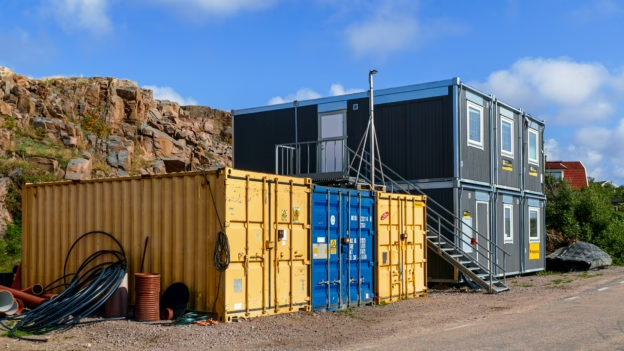
Imagine the sheer financial sinkhole of a construction site theft: a stack of copper wiring vanished overnight, power tools missing right before concrete pour, or high-value materials disappearing, stalling a timeline and triggering insurance nightmares. It’s a calculated risk that every construction manager faces, turning potential profit into certain loss.
The answer to this persistent vulnerability isn’t necessarily more security guards or complex surveillance systems, but a simple, proven, and incredibly robust solution borrowed from global shipping: the steel cargo container.
They transformed site security, acting as an immovable, climate-resistant fortress that makes your inventory virtually untouchable after the last worker leaves the jobsite.
The Costly Reality of Construction Site Crime
The financial toll of theft and vandalism on construction sites is staggering. Every missing piece of equipment, every sheet of plywood, and every spool of wire contributes to delayed completion dates, increased labor costs (to replace the stolen goods), and inevitably, higher insurance premiums. For construction managers, the problem is compounded by the high value of easily fenced items.
The most commonly targeted items include:
- Copper and Metals: Highly valuable for resale, easy to strip, and difficult to track.
- Power Tools: Portable, expensive, and quickly pawned (drills, saws, laser levels).
- Small Equipment: Generators, compressors, and welders that are essential for daily work.
- Bulk Materials: Specialty lumber, HVAC units, and finished fixtures waiting for installation.
Traditional security measures like chain link fences and padlocked sheds are often insufficient against organized or opportunistic thieves. A dedicated, weather-proof, high-security storage solution is required, and that’s precisely the role the shipping container fulfills.
Engineered for Security: Why Containers Deter Thieves
Shipping containers, specifically 20-foot or 40-foot standard ISO cargo units, are designed to survive months at sea exposed to harsh elements and constant handling. If you’re looking to buy a shipping container in New York or another northern climate, their construction is inherently security-focused, making them extremely difficult to penetrate.
1. Corrugated Steel Construction
The walls and roof of a standard container are made of high-gauge corten steel (often called “weathering steel”). This steel is corrugated, meaning it has a ridged pattern that makes it stronger than a flat sheet of the same thickness. It’s highly resistant to cutting tools. Unlike a standard shed wall, a container can’t be easily peeled back or cut through with standard bolt cutters or tin snips.
2. The Locking Bar System
The doors are the most significant security feature. Container doors seal tightly against thick rubber gaskets and are secured by multiple vertical locking bars. These bars travel from the bottom to the top of the door. When closed, the bars engage in heavy-duty cams and keepers welded directly to the door frame.
A thief must attempt to cut through or manipulate four to five separate points of engagement, often requiring specialized, loud tools like angle grinders, which draws unwanted attention.
3. Container Lock Boxes (The Essential Upgrade)
The standard security upgrade for on-site use is the lock box. This is a steel shroud welded directly onto the exterior doors. When the padlock is applied, the lock box covers the shackle and body of the lock entirely.
This modification is essential because it prevents a thief from accessing the lock with bolt cutters or pry bars. The only way to remove the lock is to cut the heavy steel lock box itself, a difficult and time-consuming process that strongly deters casual theft.
Operational Benefits: Streamlining Site Management
The advantages of using shipping containers extend far beyond simple security. They offer critical operational benefits that streamline the construction process and contribute to project efficiency.
| Operational Benefit | Impact on Project Efficiency | Security Implication |
| Material Staging | Allows immediate, organized delivery of materials (e.g., electrical conduits, flooring) months ahead of installation, saving labor time. | Reduces clutter that can conceal theft or offer thieves cover. |
| Tool Accountability | Creates a single, designated point of entry/exit for tools, facilitating mandatory check-in/check-out logs. | Centralizes high-value assets, preventing opportunistic theft from dispersed locations. |
| Weather Protection | Maintains a clean, dry environment for sensitive materials like drywall compound, power tools, and finished carpentry pieces. | Protects inventory investment, reducing the need to replace water-damaged materials. |
| Mobility | The unit can be easily transported to the next jobsite, taking the entire tool inventory with it. | Saves labor time associated with inventorying and packing a traditional site office or shed. |
Using containers allows construction firms to adopt a “just-in-case” inventory model for tools and small items, rather than a risky “just-in-time” model, ensuring work never stops because of a missing router or generator.
Integrating Containers into Your Security Protocol
For maximum effectiveness, the container must be viewed not just as a large box, but as the cornerstone of the site’s security plan. A professional approach involves strategic placement and simple, low-cost augmentations.
- Strategic Placement: Position the container in a highly visible area, preferably within the view of a site camera or near the site entrance. If possible, place the doors facing a fixed object (like a building foundation or another container) to prevent the doors from being pried open by a vehicle or heavy equipment.
- Lighting and Surveillance: Install motion-activated security lights directly aimed at the doors and the sides of the container. If the site has remote monitoring, ensure the container is clearly visible within the camera’s field of view.
- Anchoring: Though containers are extremely heavy, thieves may attempt to tow them away, particularly smaller 20-foot units. Bolt the container to concrete footings or use heavy chain restraints secured to fixed structural elements.
Q & A: Container Security on the Jobsite
Can’t thieves just cut a hole in the roof or walls?
Cutting through the corrugated corten steel is possible, but it’s extremely loud, takes significant time, and requires a gas torch or large angle grinder. The noise and time required make it a high-risk endeavor that typically deters opportunistic or smash-and-grab thieves, who prefer quieter, faster methods.
What is the single most important security upgrade I need for a container?
Other than investing in the best shipping containers for sale in Maryland and the surrounding areas, a high-quality steel lock box and a sturdy, hardened steel padlock (often referred to as a “disc lock”). Without the lock box protecting the shackle, even the toughest padlock can be defeated quickly by powerful bolt cutters.
Should I use a standard master lock for the container?
Absolutely not. You need a high-security lock specifically designed for commercial use, preferably one with a hidden or shrouded shackle. A standard padlock is easily defeated and will negate the security benefits of the steel container itself.
LGI Transport: Your Partner in Site Security Logistics
At LGI Transport, we understand that logistics means supporting the entire supply chain, including jobsite security infrastructure. We specialize in sourcing, transporting, and precisely placing these essential security assets exactly when and where you need them. We eliminate the administrative hassle of coordinating flatbeds, specialized trailers, and crane services so you can focus on building.
Are you ready to secure your jobsite and protect your valuable assets? Contact LGI Transport today to secure your infrastructure so your project stays on time and on budget.